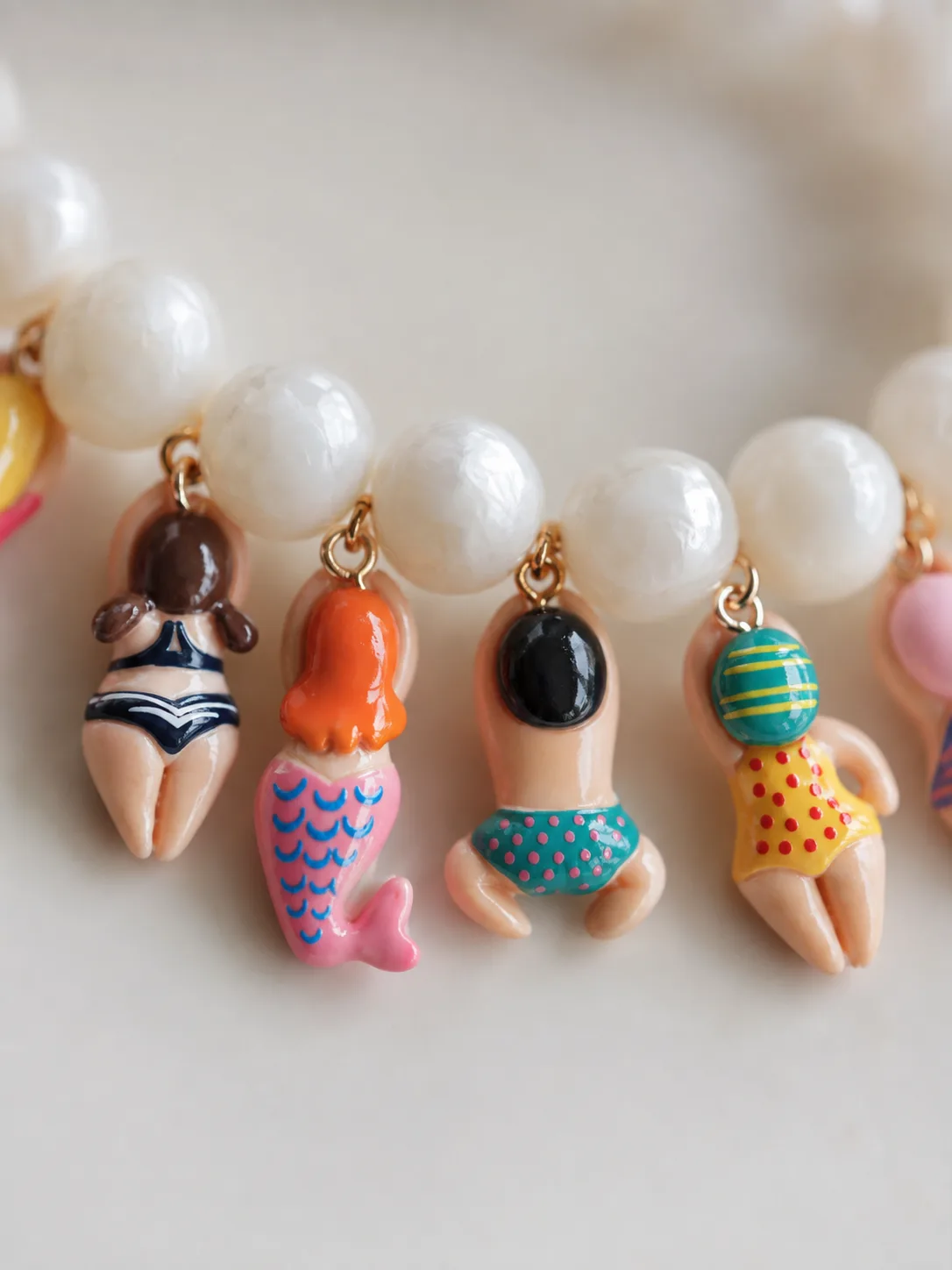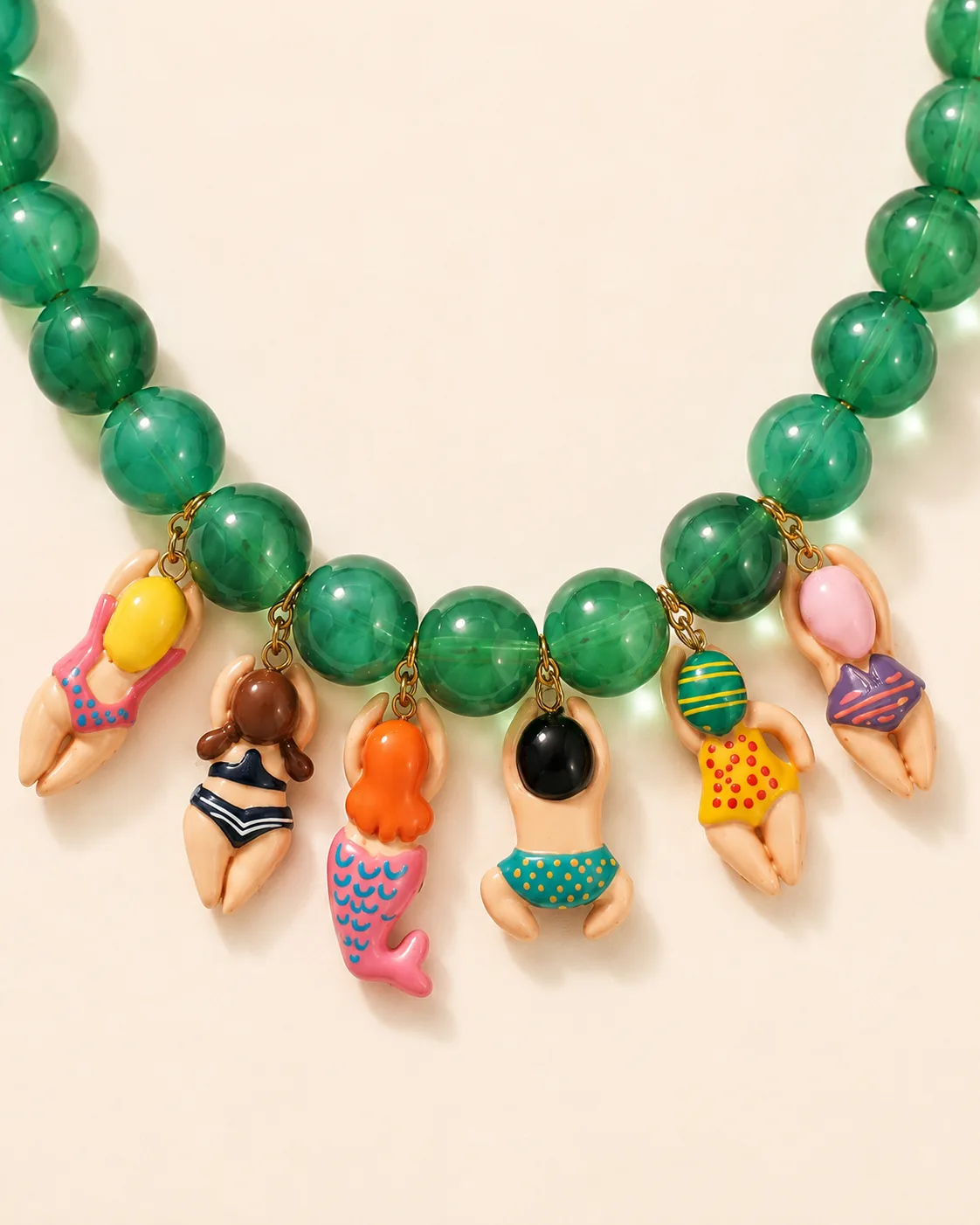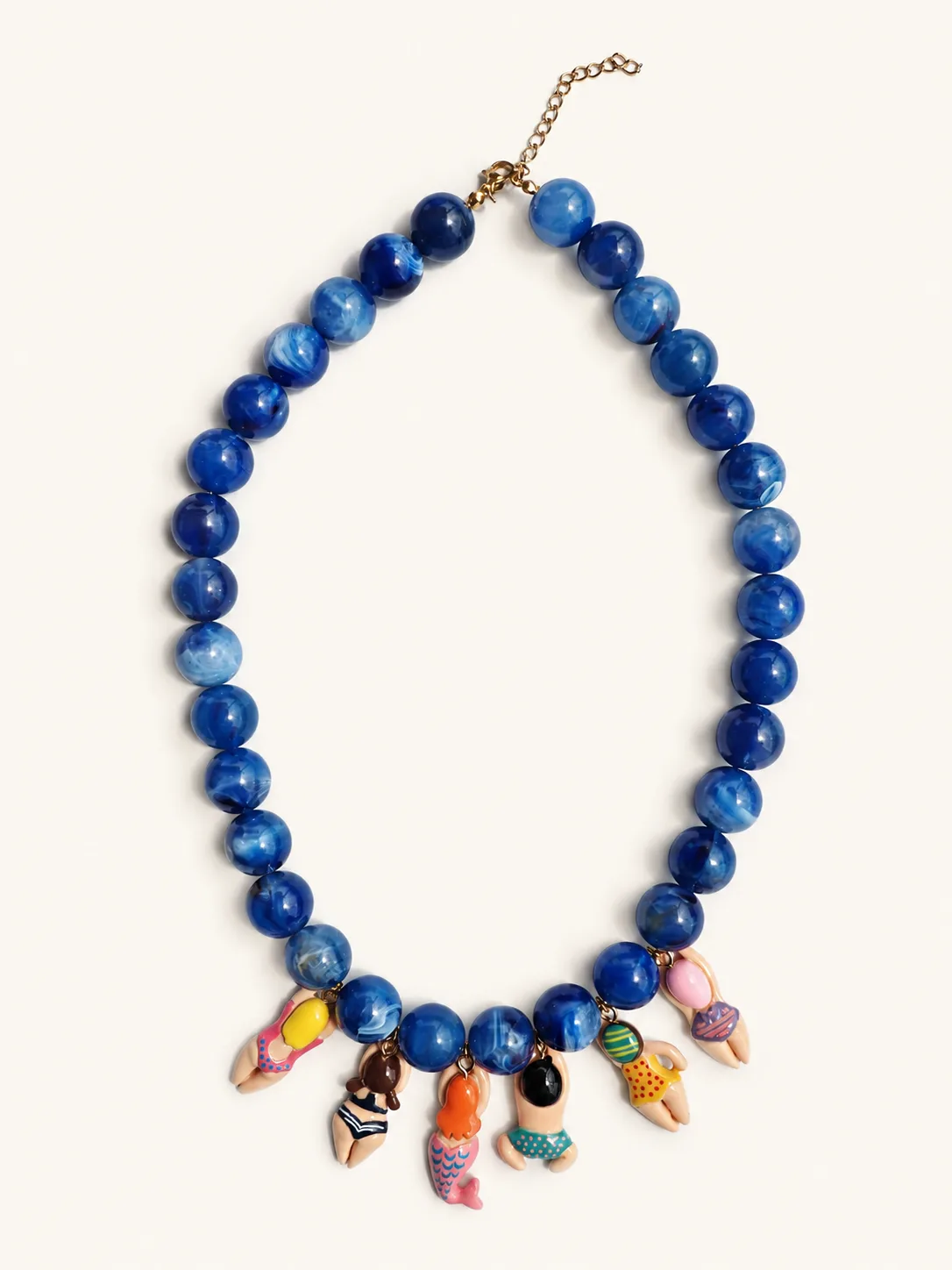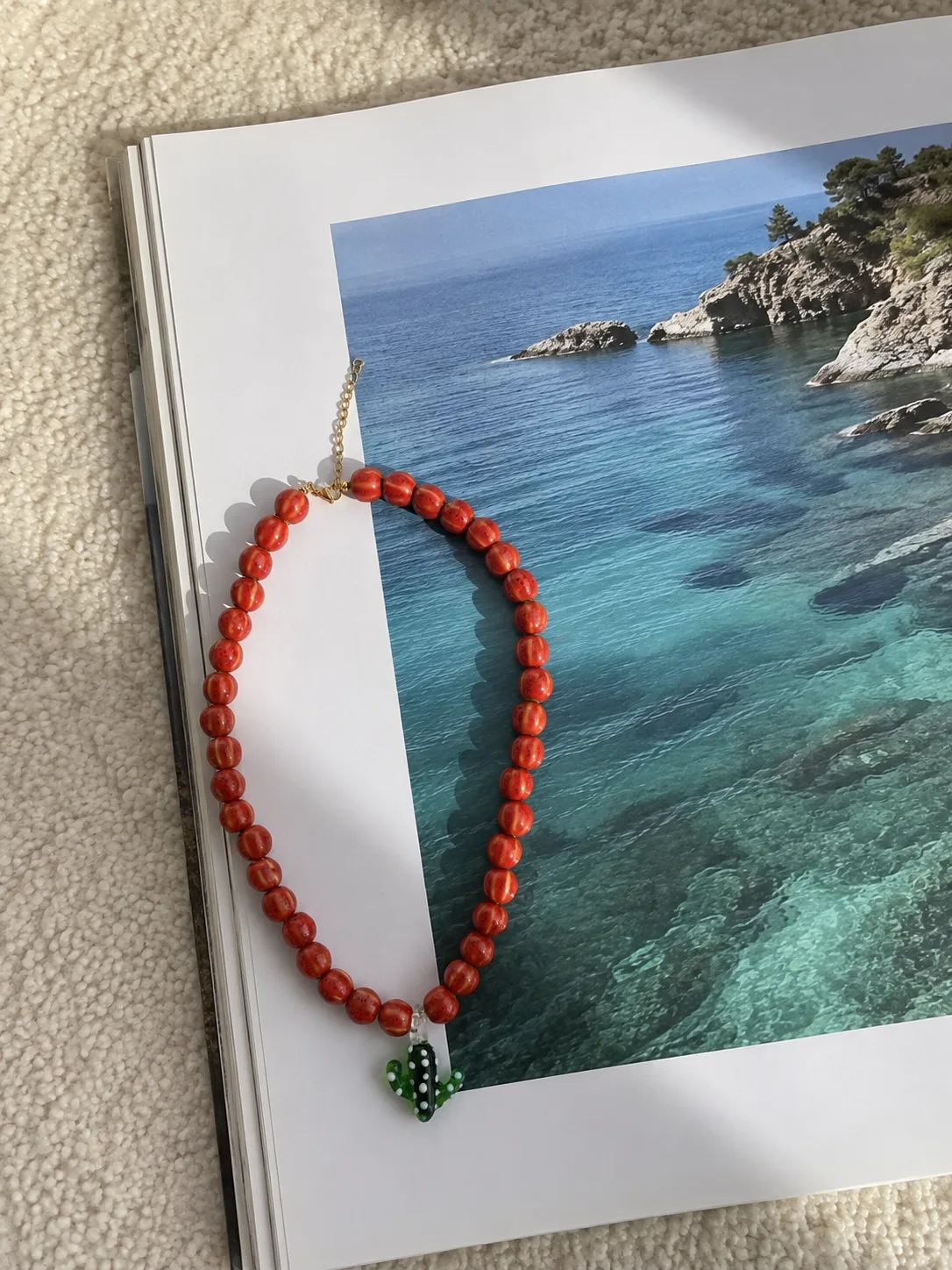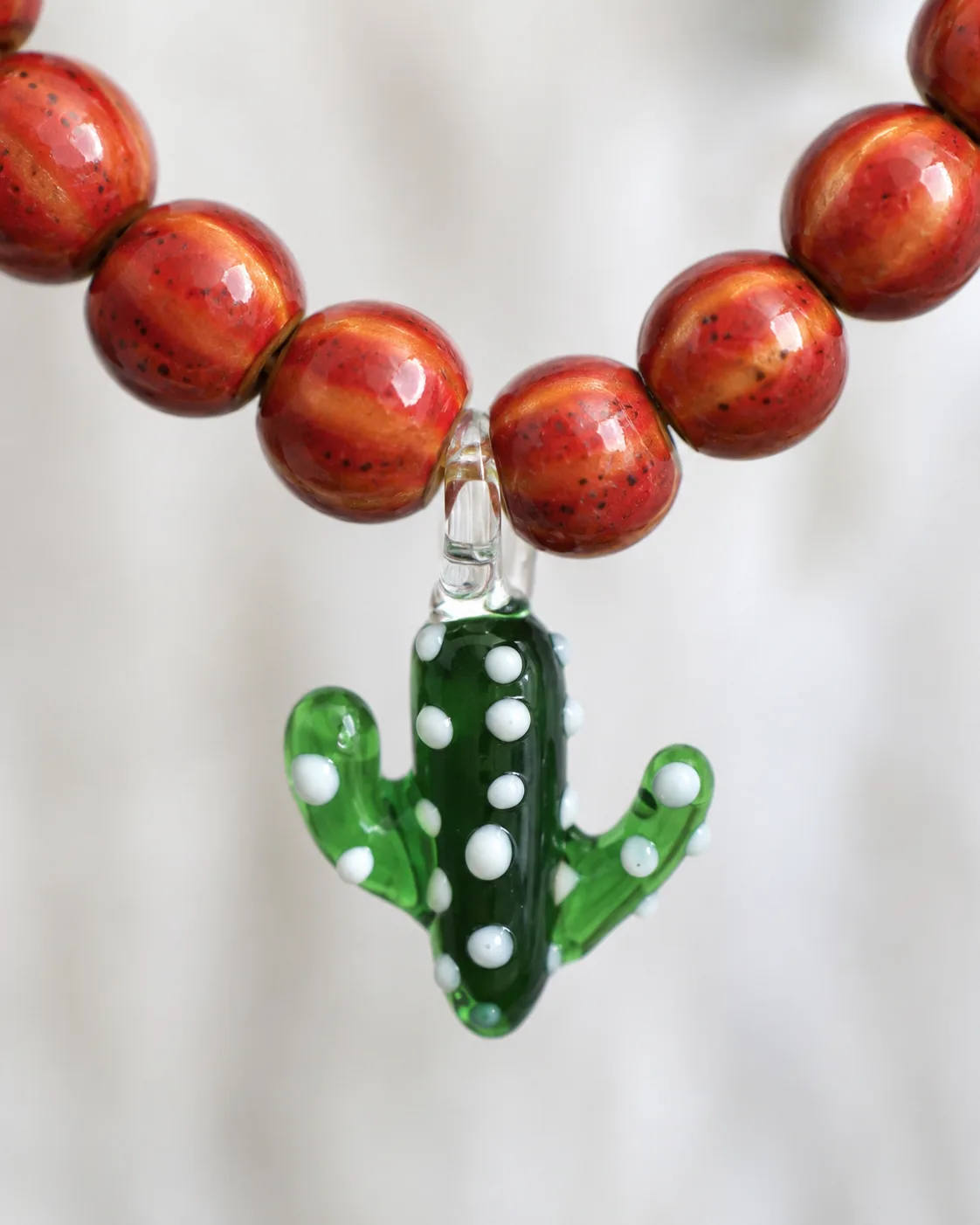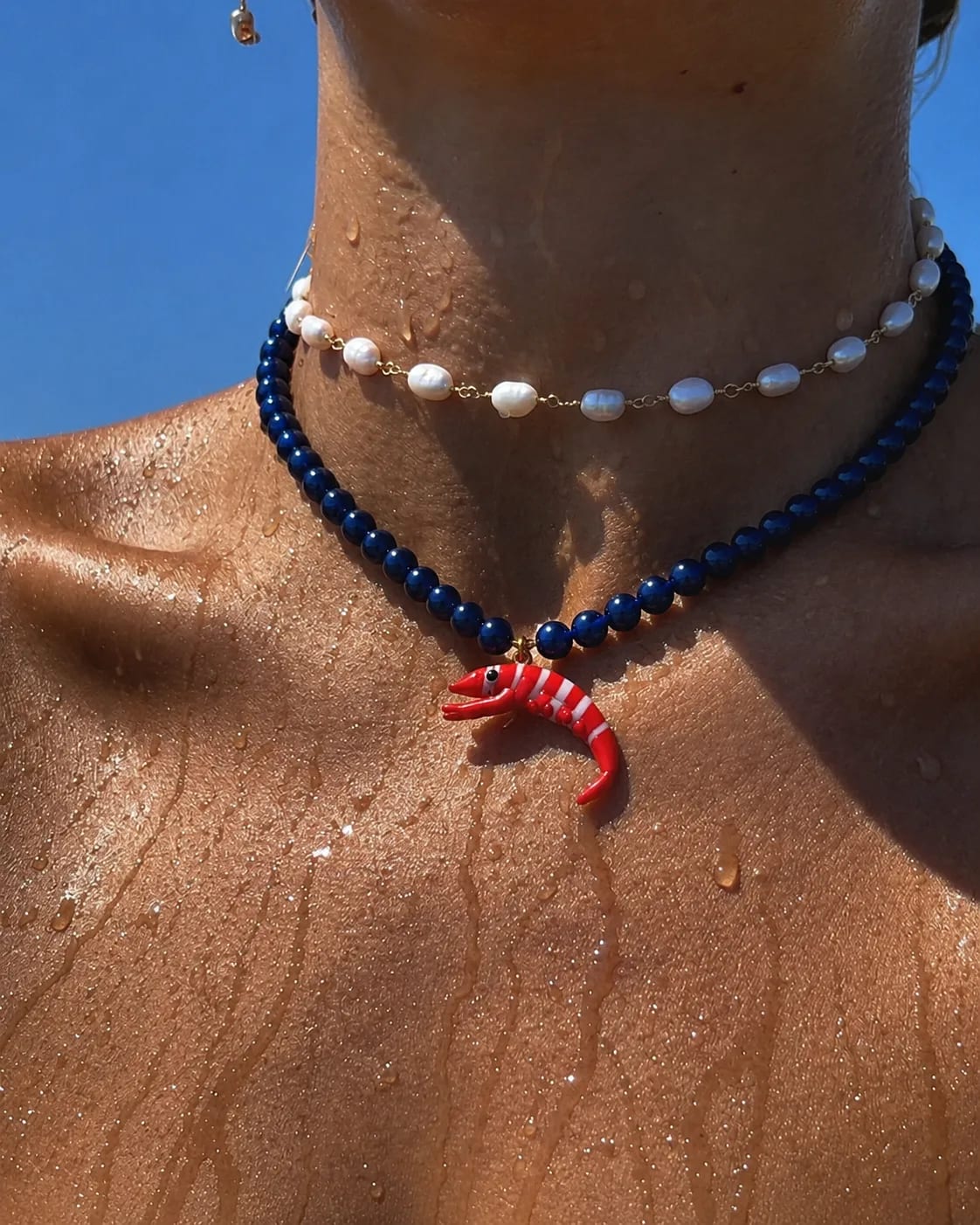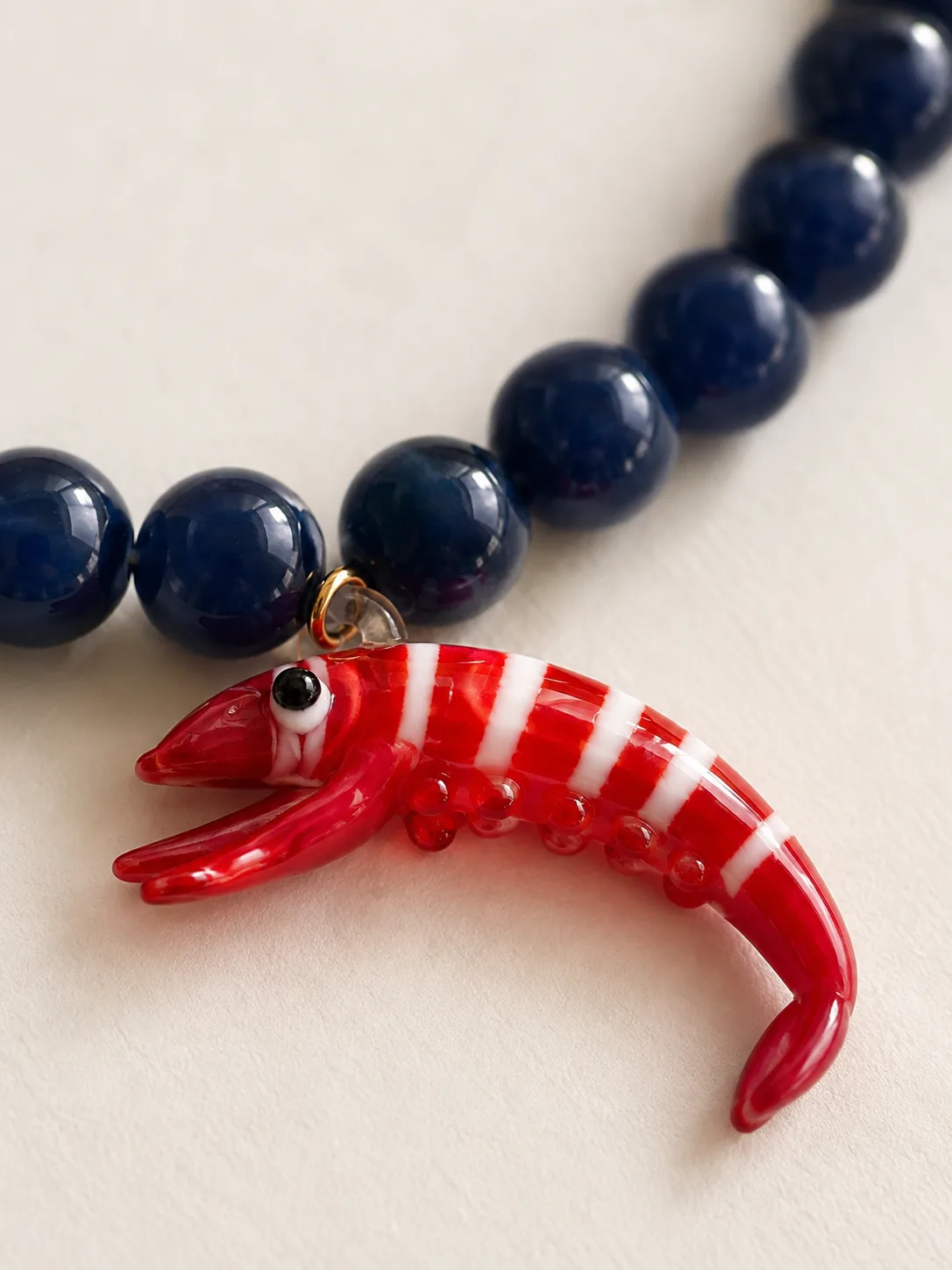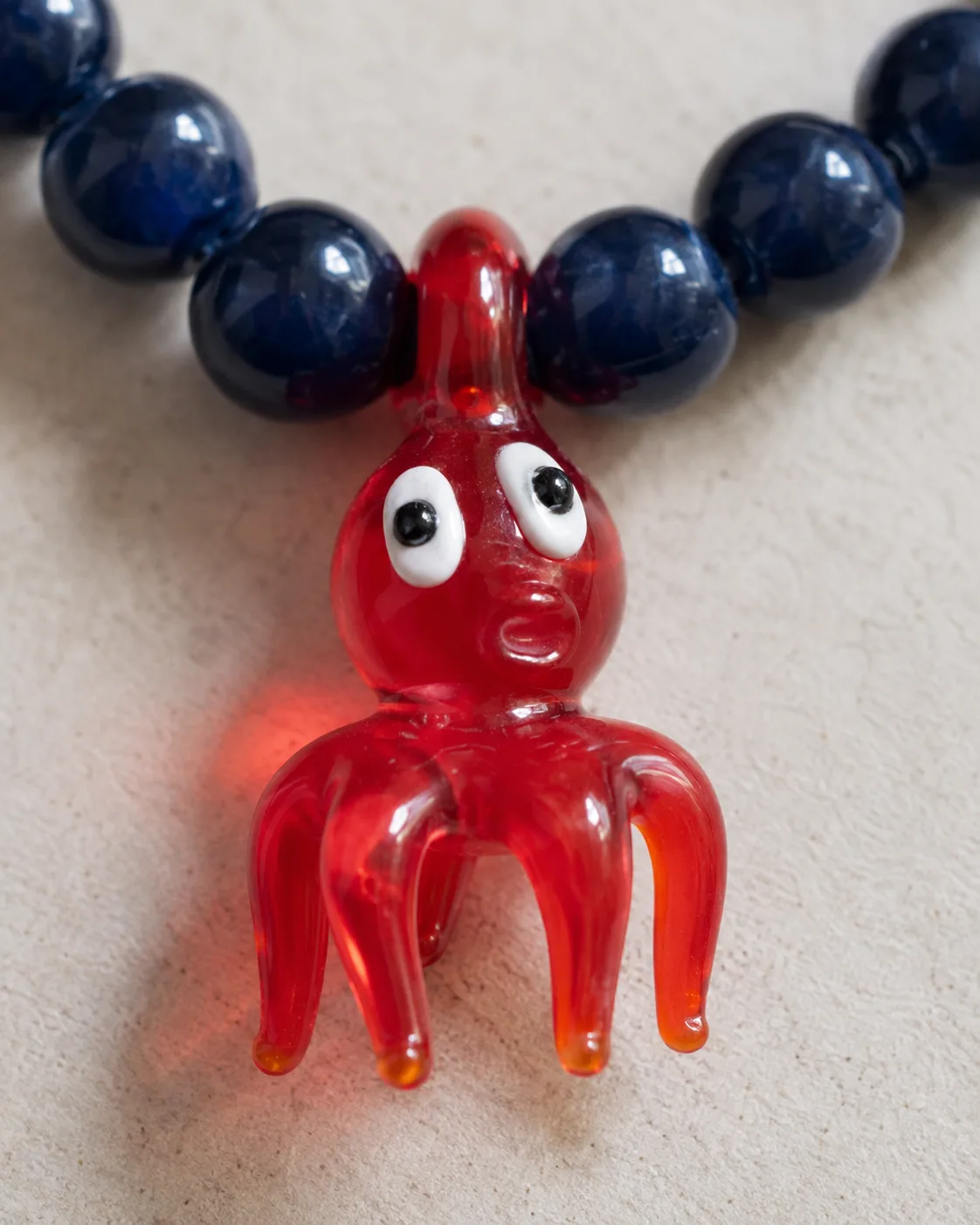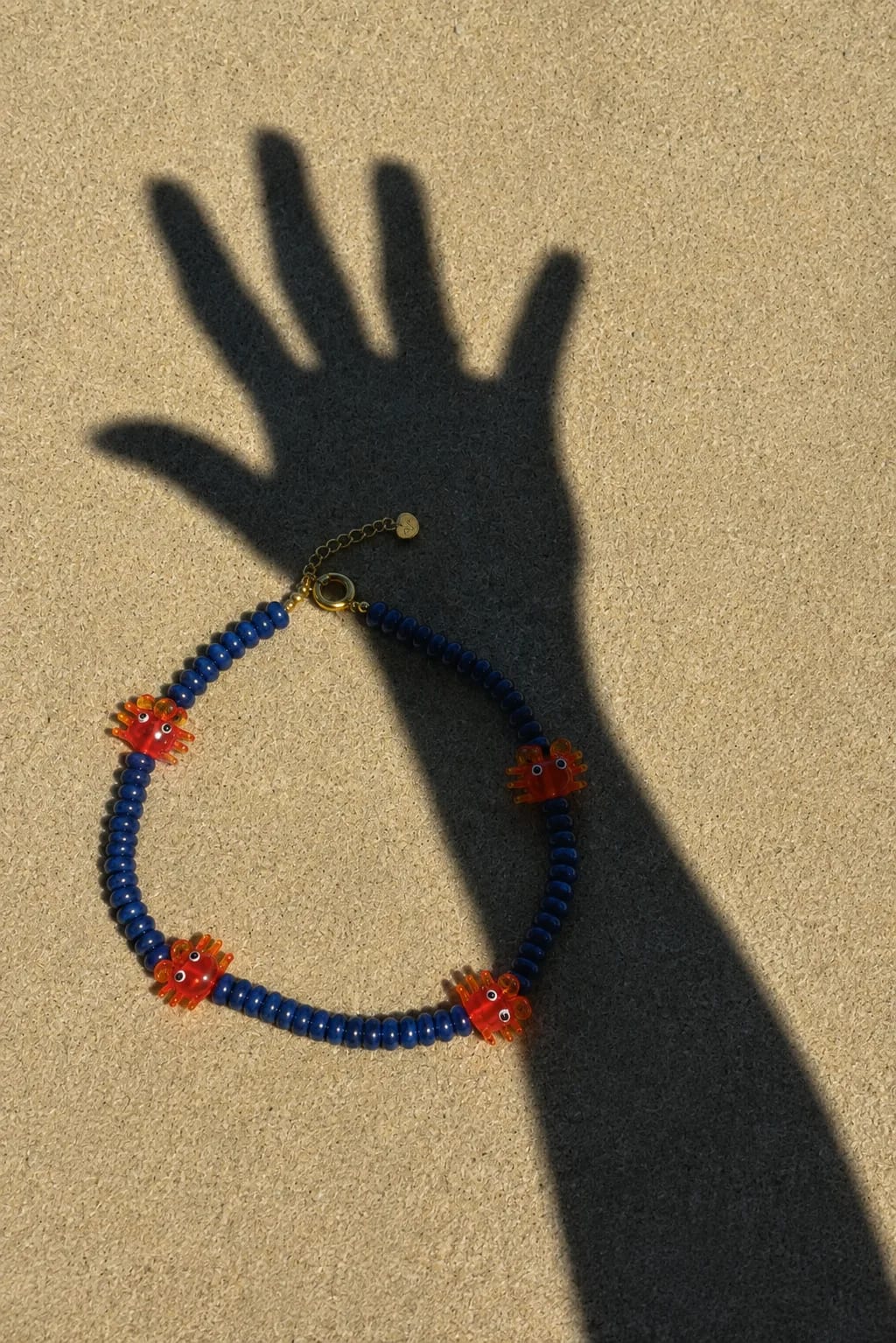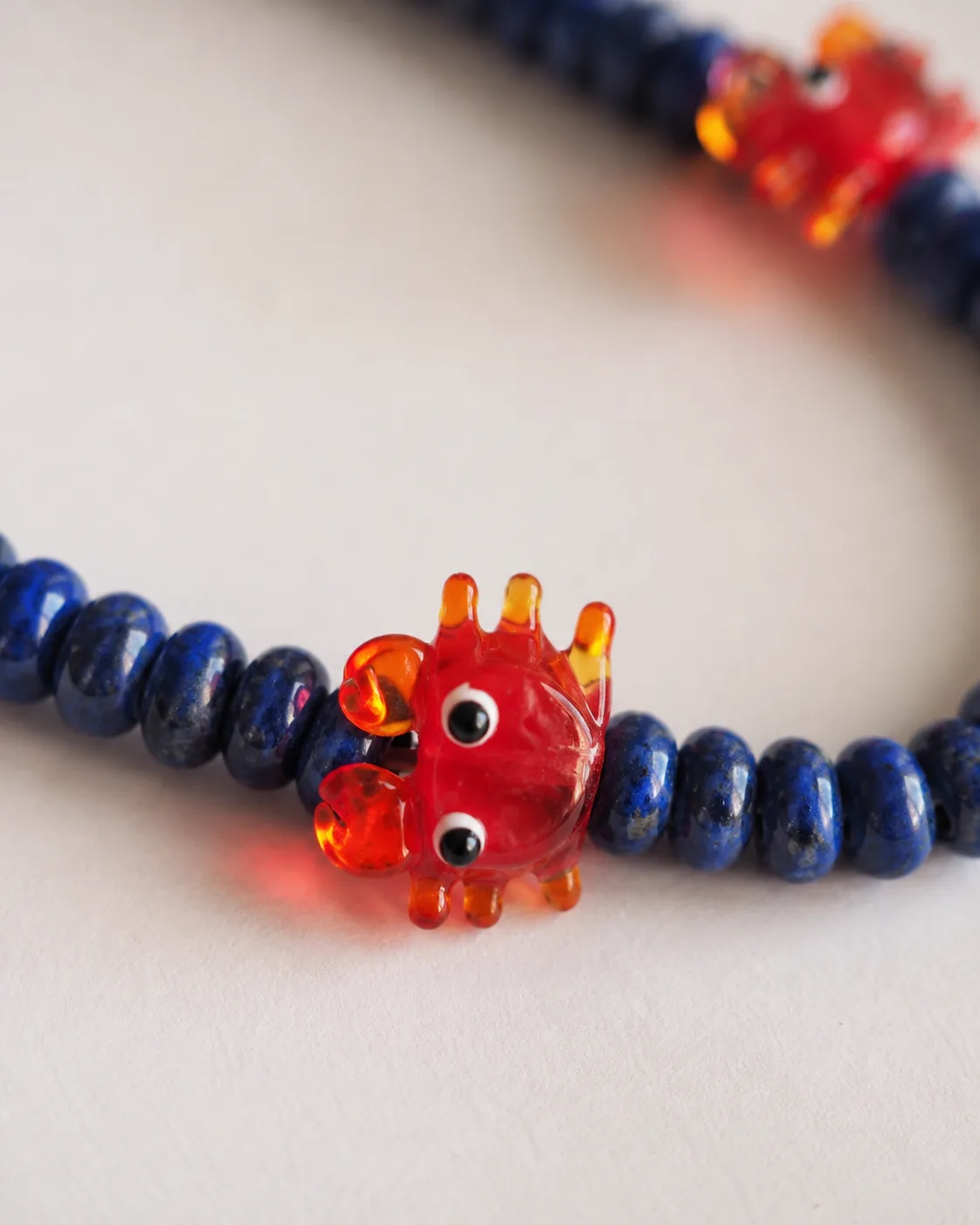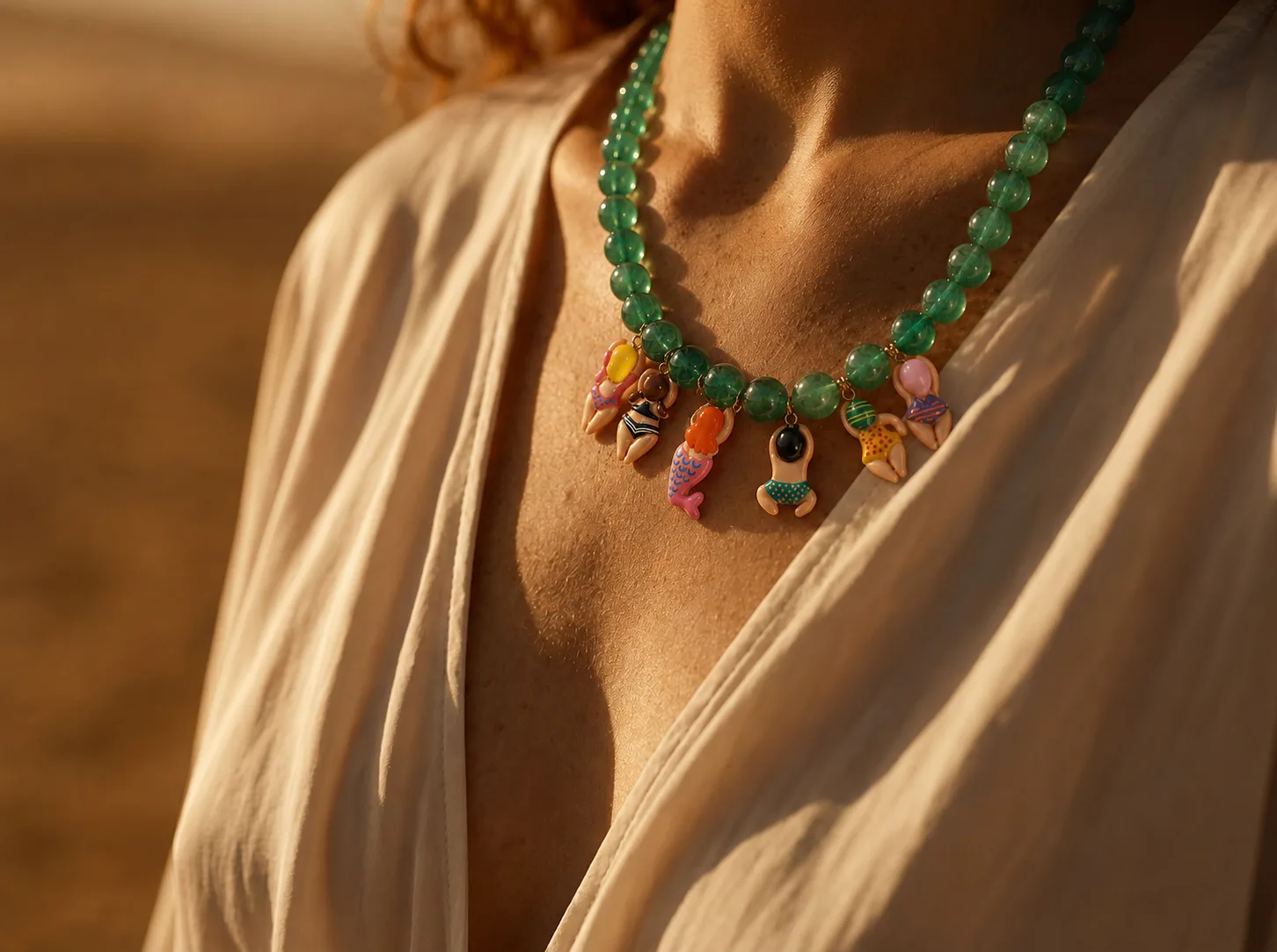
The beach is the harshest environment for jewellery: salt, sand, sunscreen, heat and the rub of your bag, all across the same day. Some pieces take it in their stride, others come out damaged without your having done anything wrong.
What holds up well
Stainless steel, glass, resin and textile cords cope very well with a summer day. These are materials that don't oxidise and that clean water is enough to rinse. A necklace strung on steel wire with a stainless steel clasp is made for this.
What's better left at home
Silver blackens on contact with salt and sweat. Brass and plating wear first at the friction points, on the clasp and at the nape. Natural pearls and porous stones, for their part, absorb sunscreen and stain for good.
The real culprit: sunscreen
Far more than seawater. Sun filters leave a greasy film that clings between the beads and in the details, dulls the shine and traps sand. The one move that changes everything: apply the cream first, let it soak in, then put the necklace on.
Choosing a length that doesn't get in the way
A necklace that's too long catches on your swimsuit and your bag. Around 42 cm, the piece sits at the base of the neck and stays visible without getting in the way, whether on bare skin or over an open shirt.
After the beach
Rinse with clean water, dry with a soft cloth, store flat. Three moves, one minute, and the piece gets through the summer without a mark.