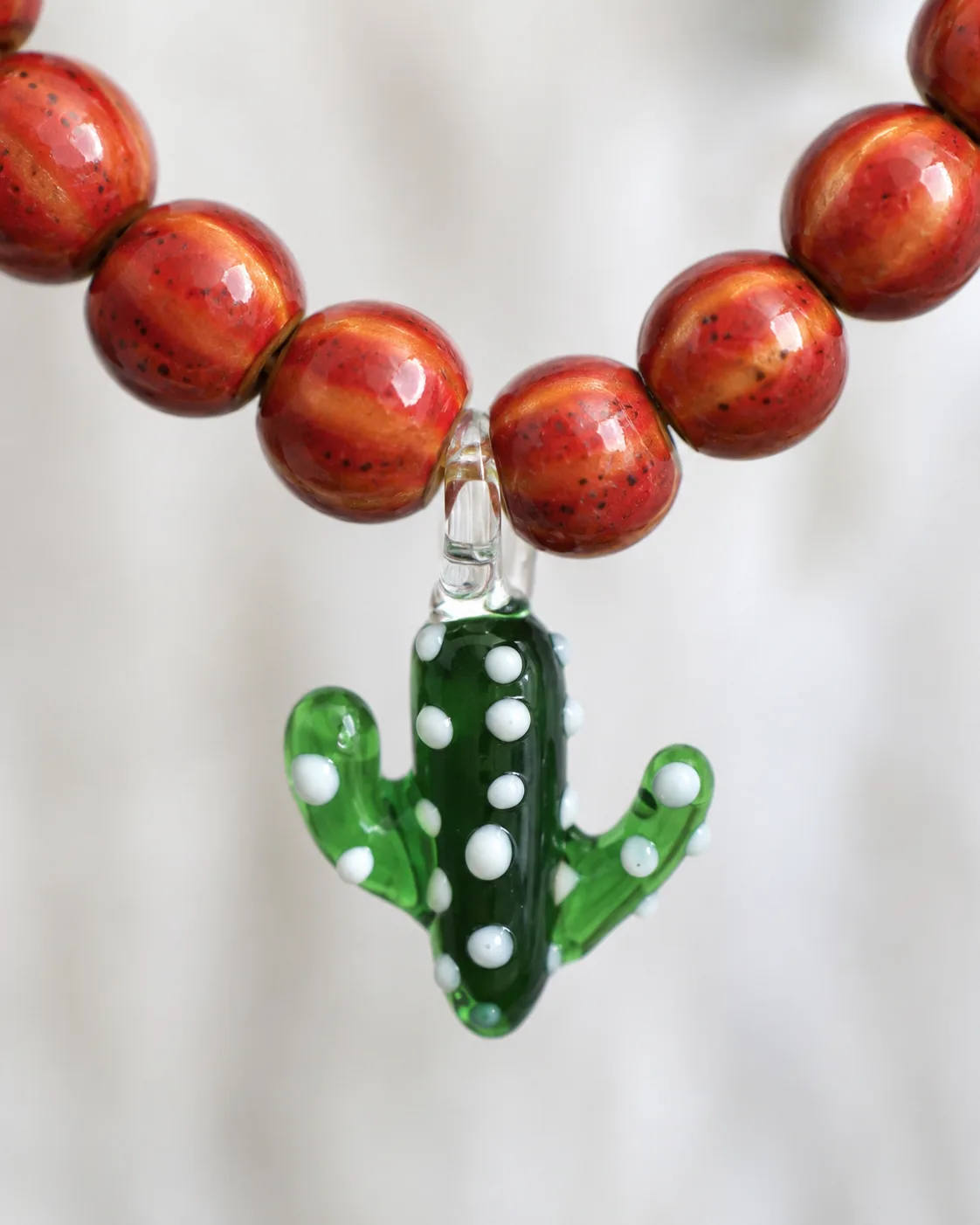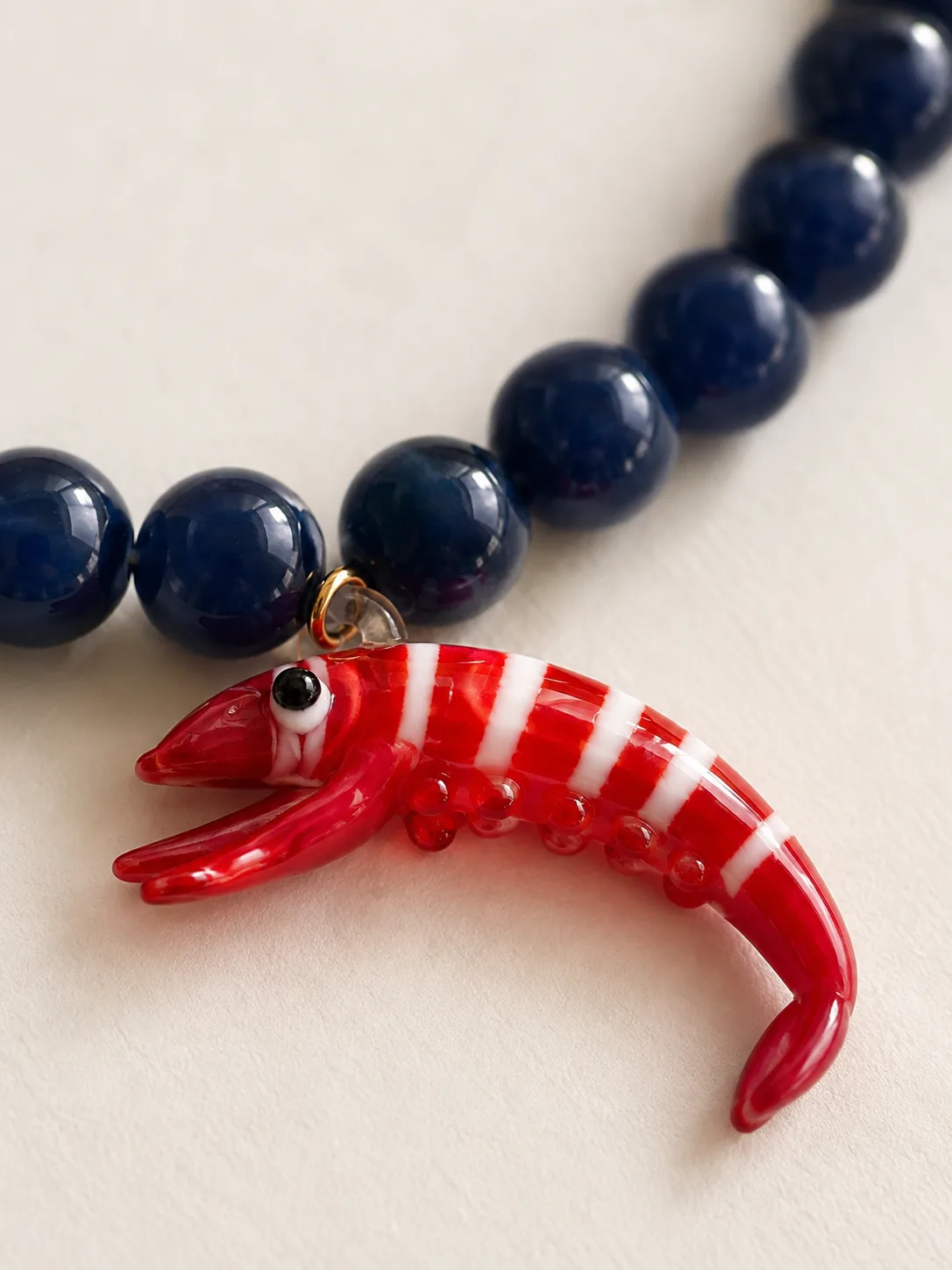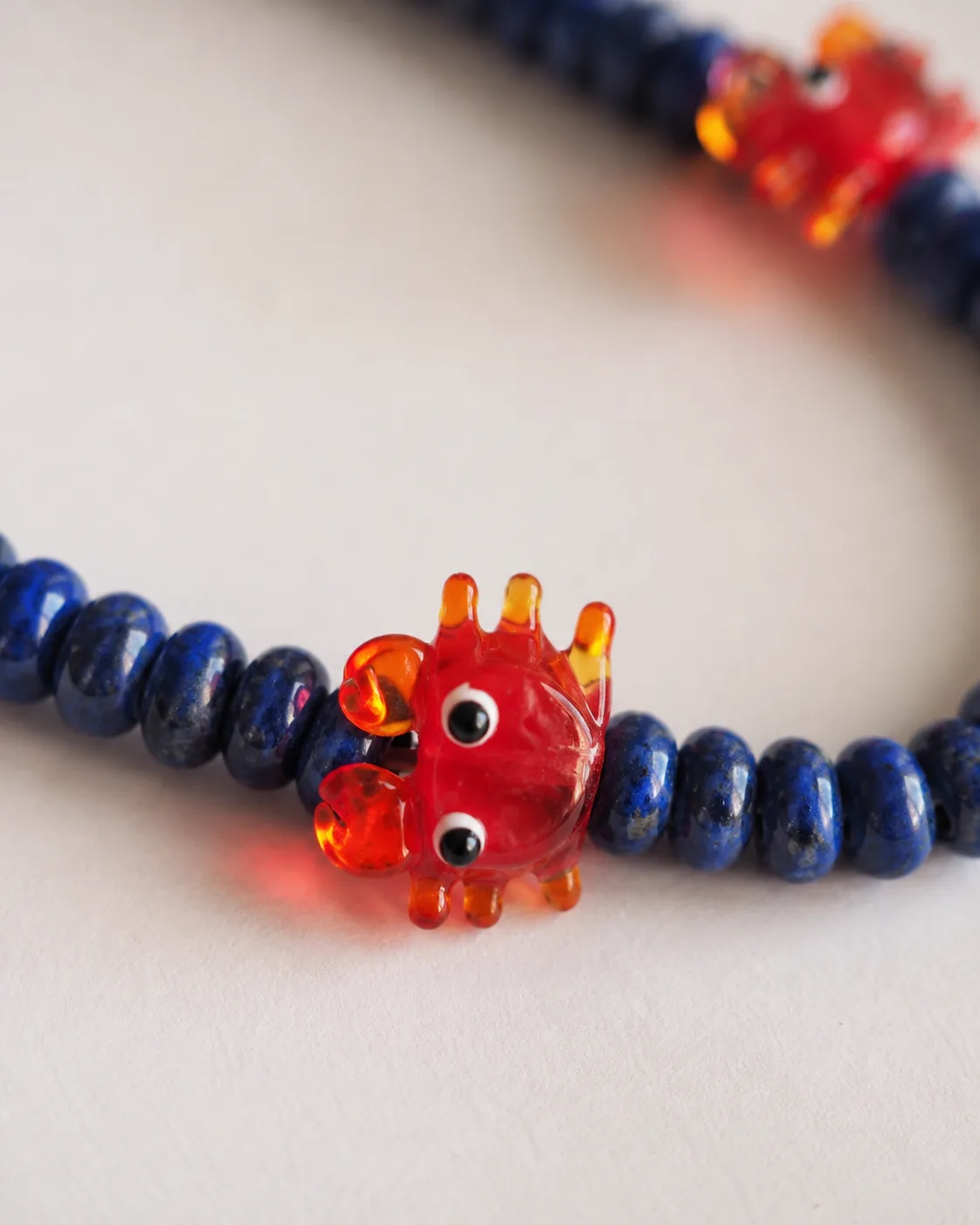
Lampwork glass is a flame-working technique. A rod of coloured glass is heated at the torch until it turns soft, then stretched, wound and shaped with pliers during the few seconds it stays malleable. Nothing is cast in a mould, nothing is reproduced identically.
What sets it apart from blown glass
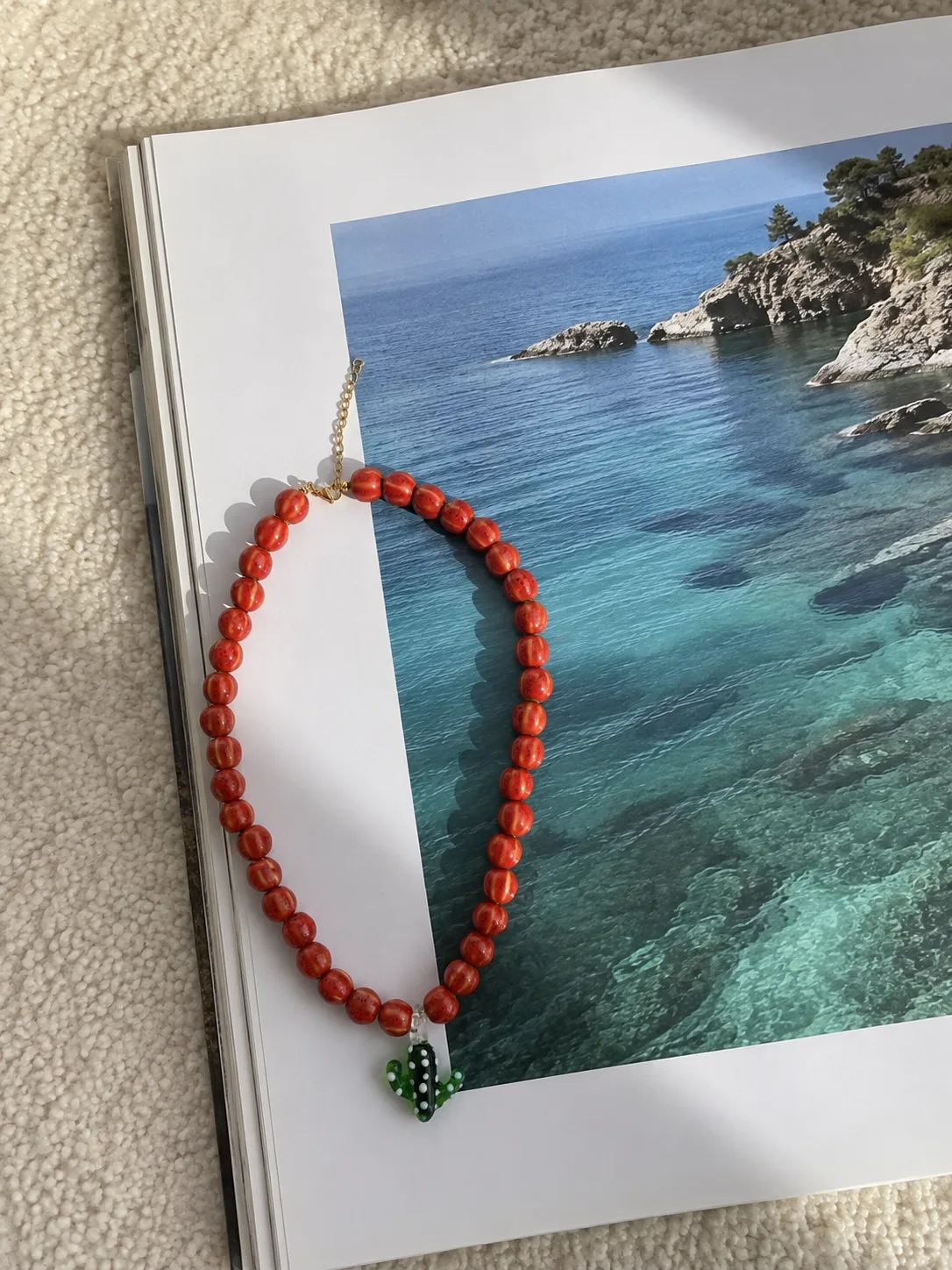
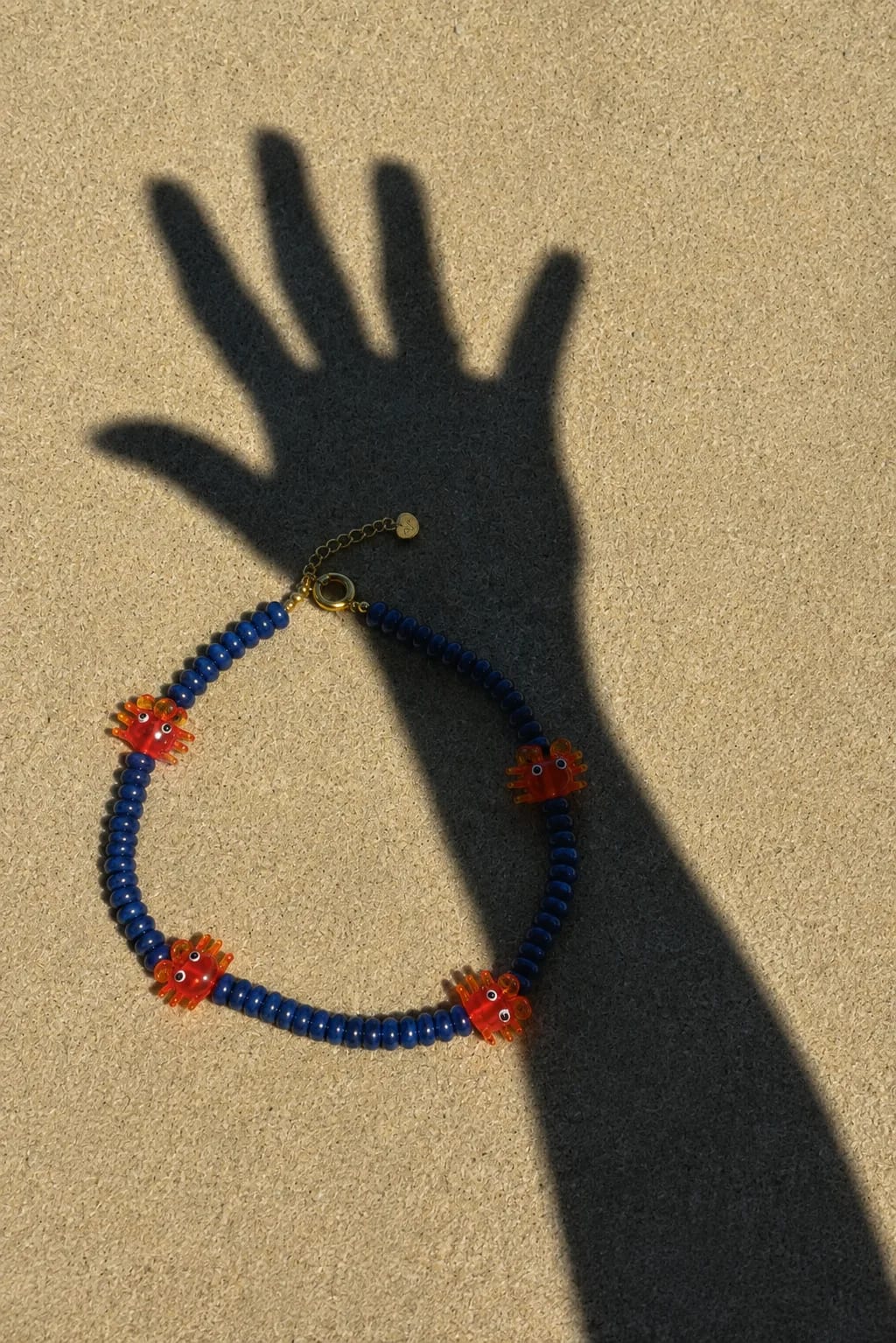
Blown glass is worked in volume, from a mass gathered at the furnace, and is used to make vessels: vases, carafes, glasses. Lampwork glass starts from a solid rod and is used to make small, solid forms, at a scale of a few centimetres. It's the technique behind glass beads, and the one that makes it possible to give a body, claws and eyes to a two-centimetre crab.
Why every piece is different
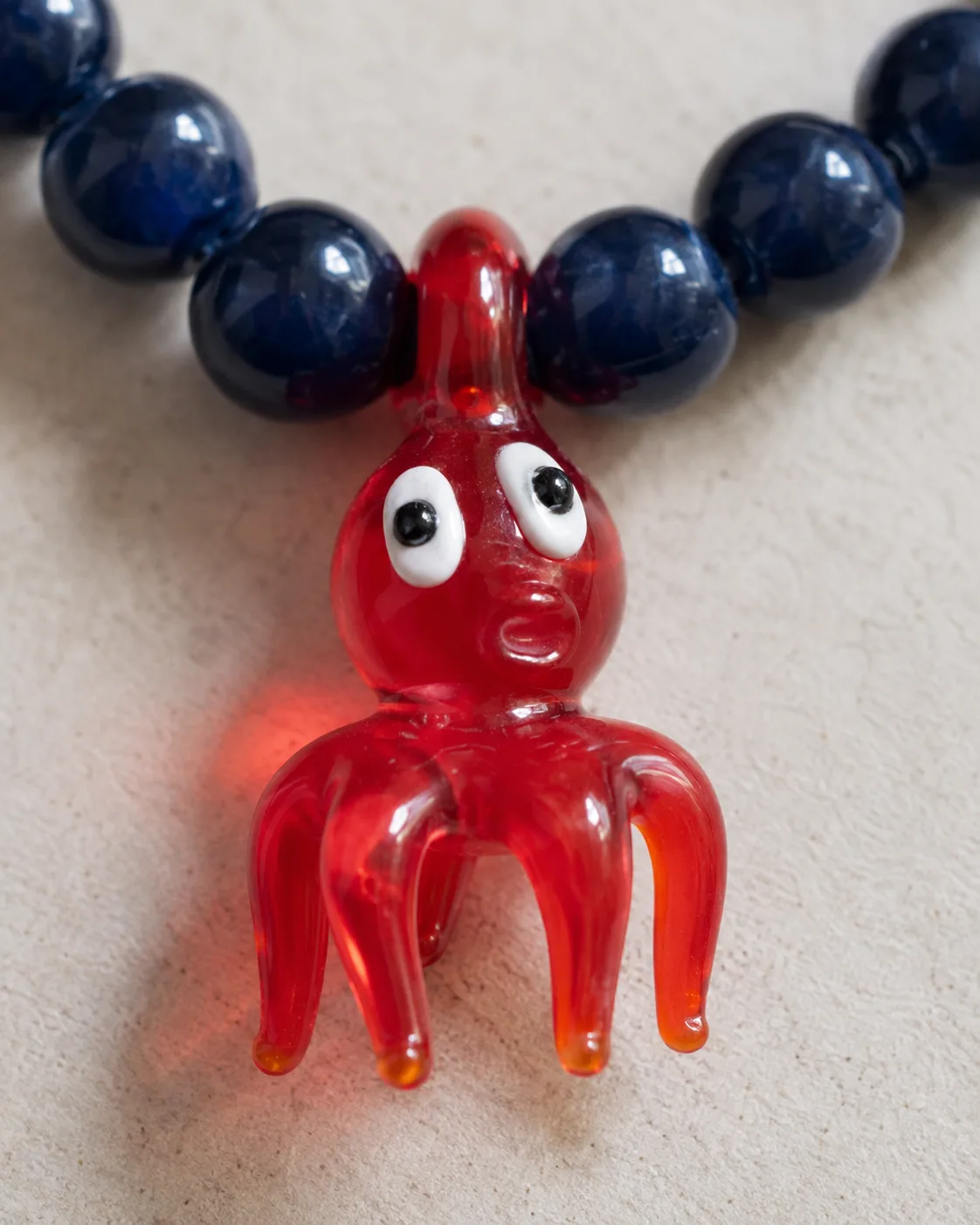
The work is done hot, with no mechanical reference point. The temperature of the flame, the speed of the wrist and the exact moment a detail is placed change from one piece to the next. On a charm, it's the eyes that vary the most: they're placed last, at the tip, and it's that detail that gives each little creature its character.
Bubbles and variations aren't flaws
A tiny bubble caught in the material, a shade slightly denser on one side: these are the traces of the maker's hand. They're proof the piece didn't come out of a mould. An industrial object is identical to the one beside it; a lampwork-glass piece never quite is, and that's what you're buying.
Is it fragile?
Lampwork glass stands up well to everyday wear, but it doesn't like knocks against a hard surface. A necklace laid flat in a box or a pouch is perfectly safe. Just avoid leaving it at the bottom of a bag with your keys.