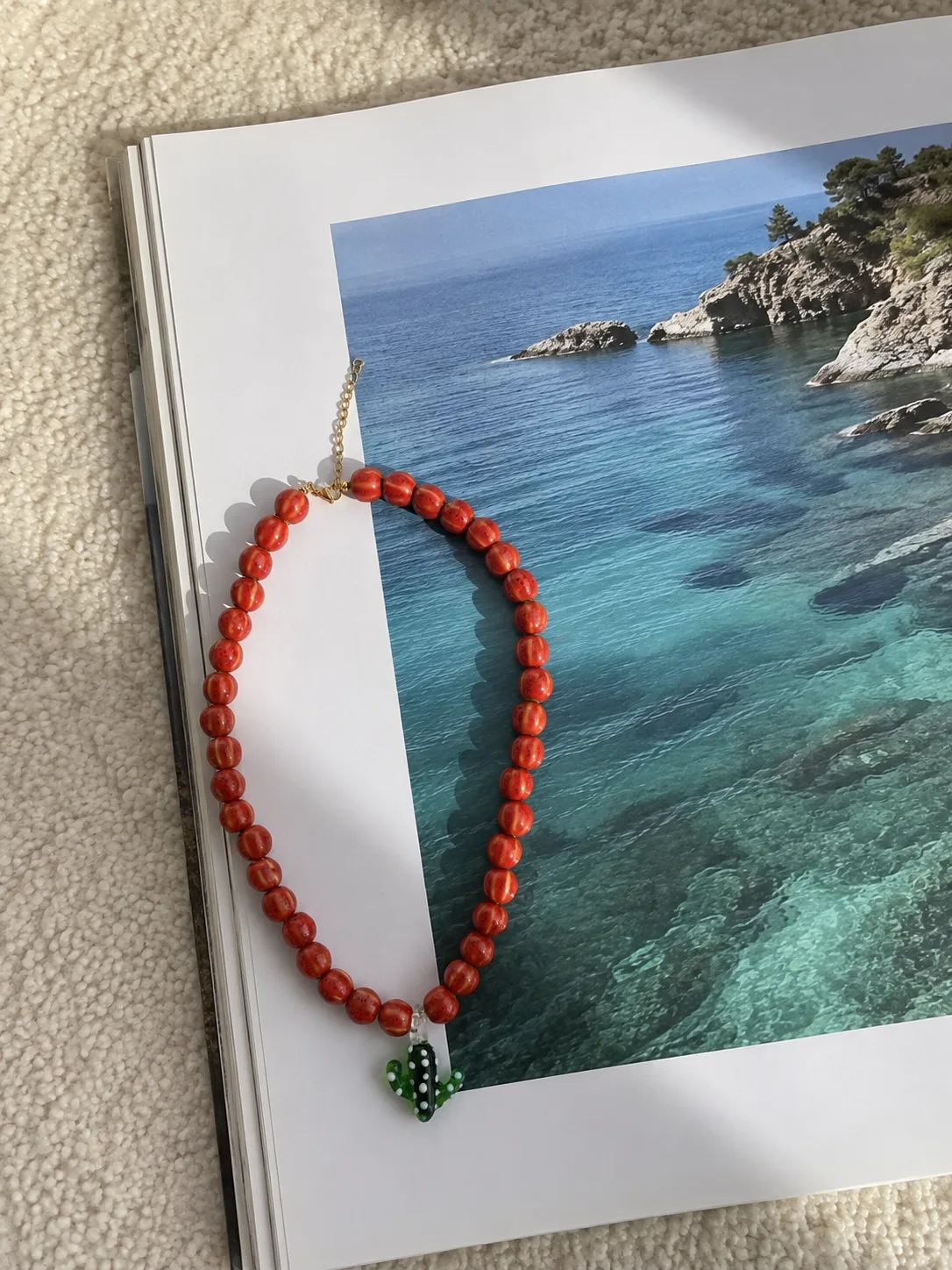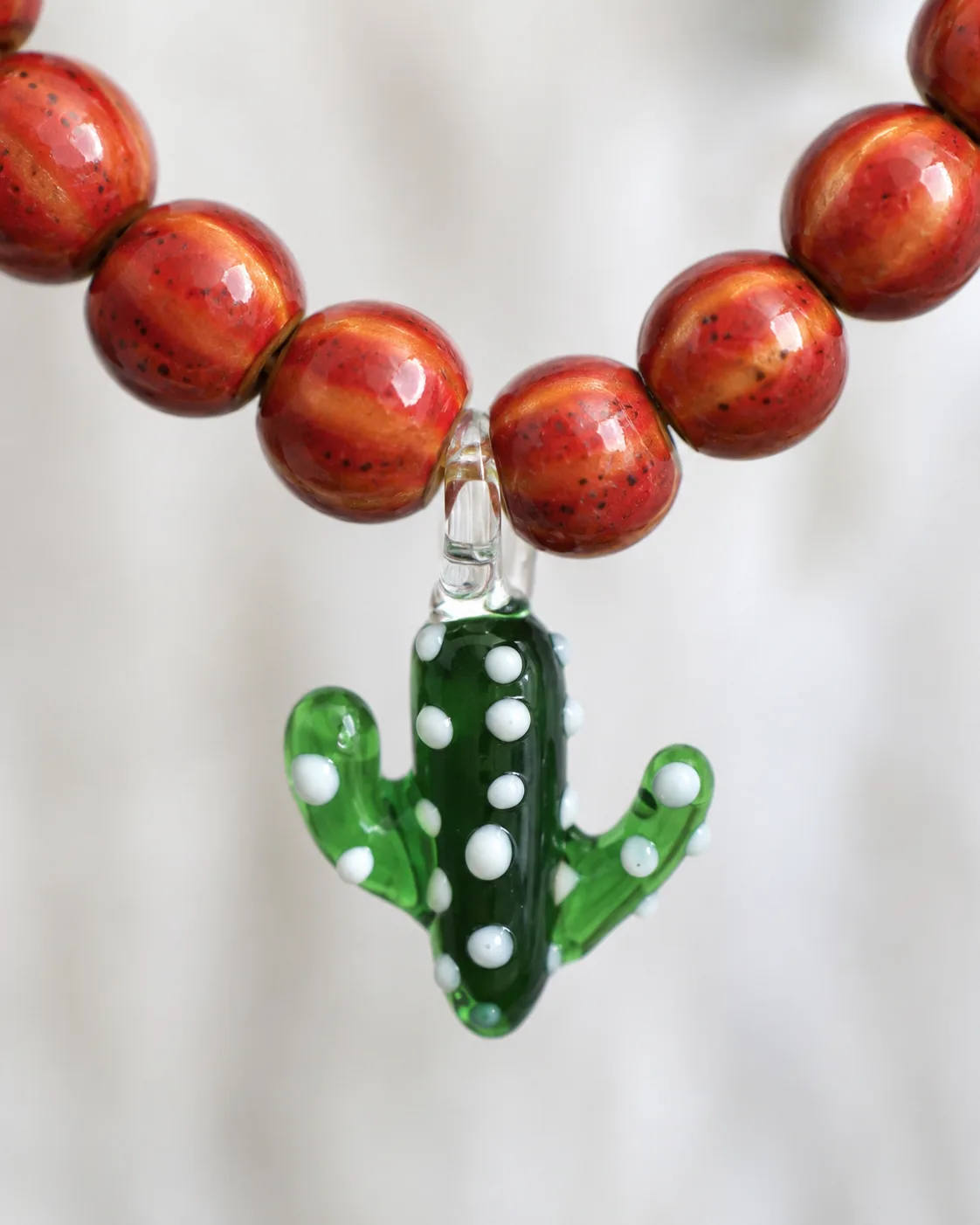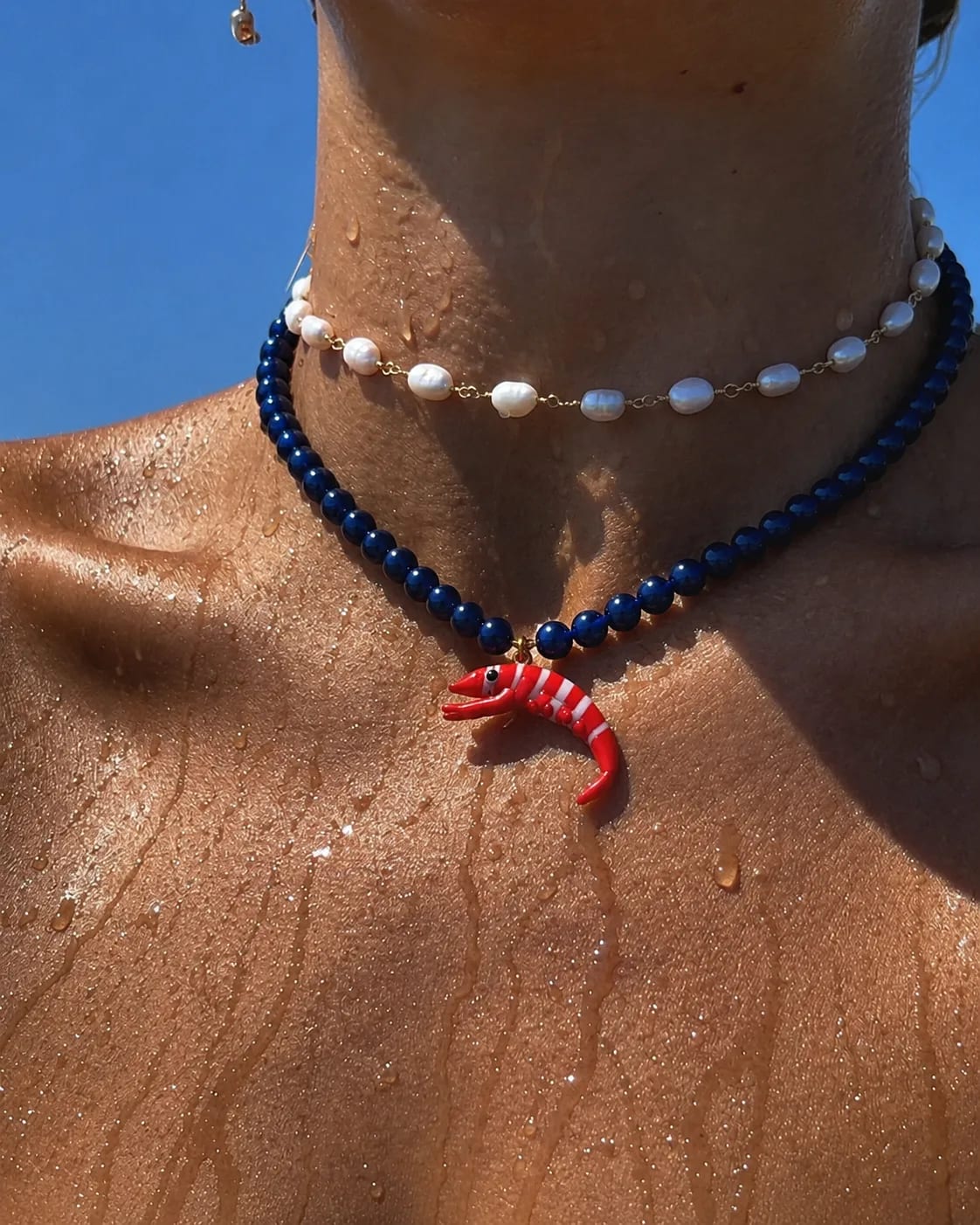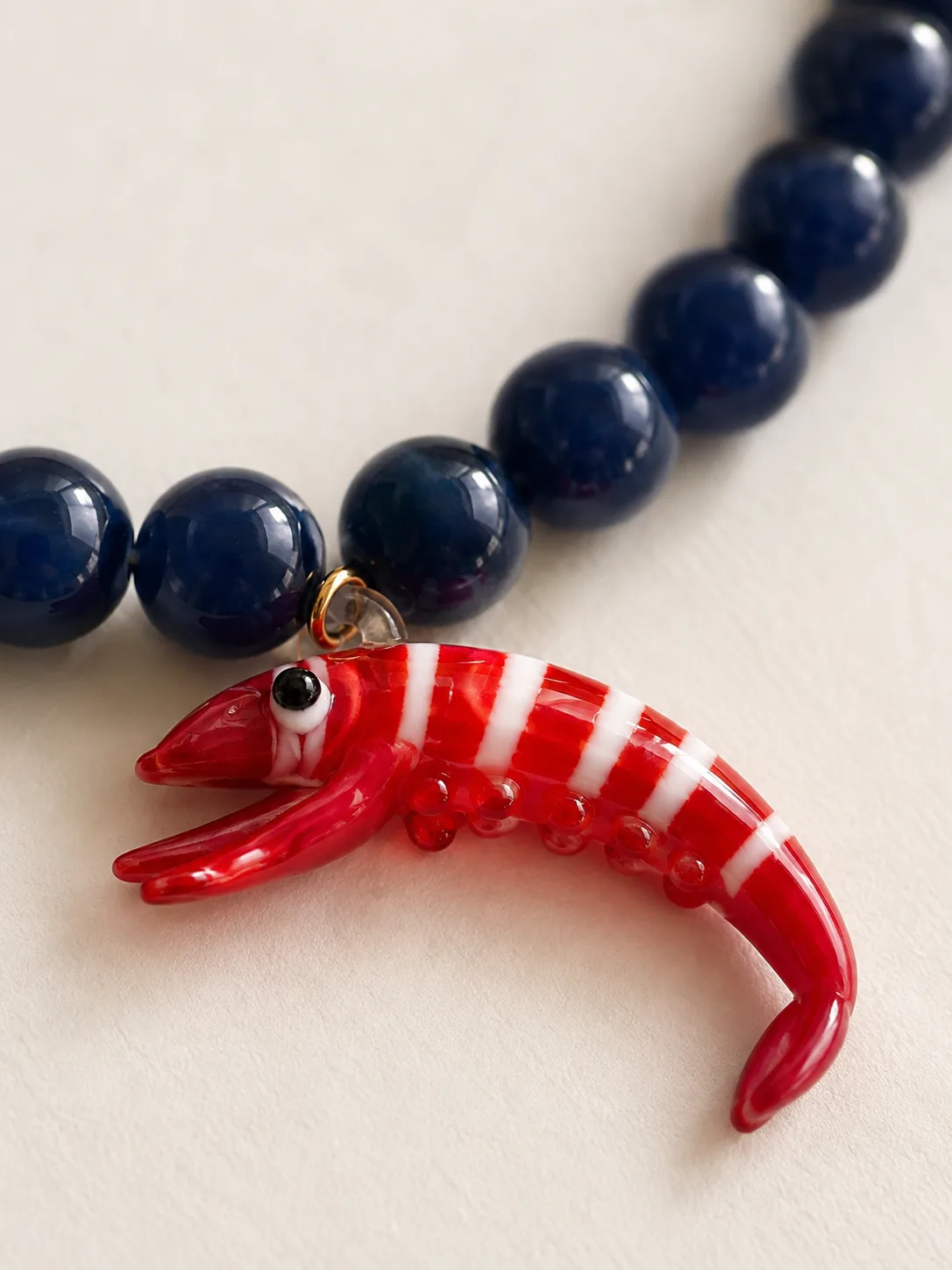
Un collier de perles s'abîme rarement d'un coup.
Oups — voici la version anglaise du contenu :
Content
A beaded necklace rarely gets damaged all at once. It dulls slowly, through a build-up of things you don't see: perfume, cream, sweat, salt. The good news is that the habits that prevent it take just a few seconds.
The rule that matters most: last on, first off
Put your necklace on after perfume, cream and hair styling, and take it off before removing your make-up. This single habit prevents most of the damage, because it's prolonged contact with cosmetics that dulls the shine of the beads and attacks the gold finish of the clasp.
Sea water, pool and shower
Take the necklace off before swimming. Salt is abrasive once dry, and chlorine attacks gold finishes far faster than seawater does. In the shower, it's soap that leaves a dull film between the beads, where a cloth struggles to reach.
If the necklace has been in salt water, rinse it in clean, lukewarm water, then dry it immediately with a soft cloth. Salt drying on the wire is more of a problem than the water itself.
Everyday cleaning
A soft, dry cloth, run over bead by bead after each wear, is enough in the vast majority of cases. No products, no alcohol, no jewellery cleaner: these are designed for metal and attack resins and finishes.
Storage
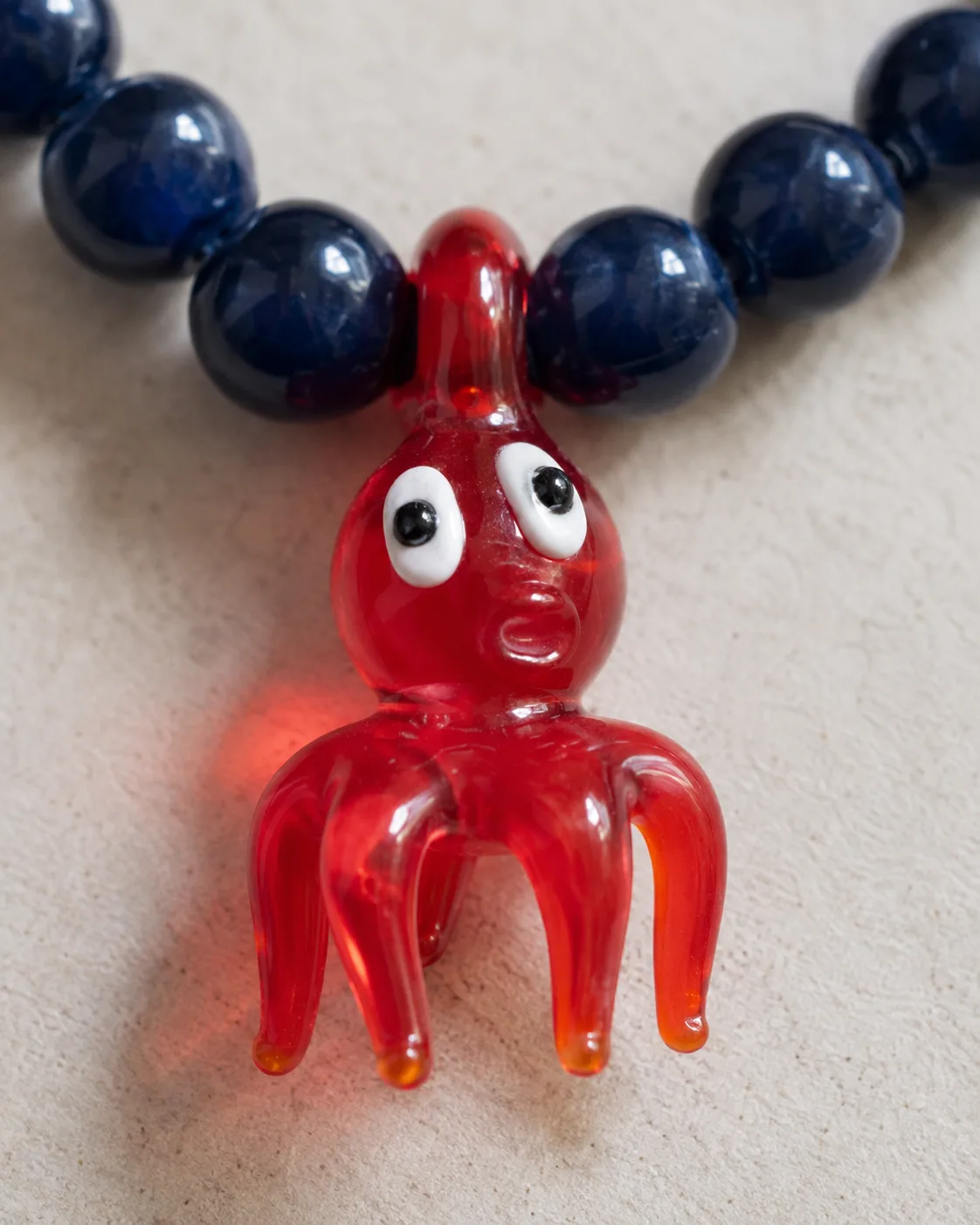
Flat, in a pouch or a box, and kept apart from other jewellery. A necklace left hanging for a long time pulls on its wire, and two pieces rubbing together in the same box scratch each other. It's the most common cause of micro-scratches on the glass charms.
The clasp
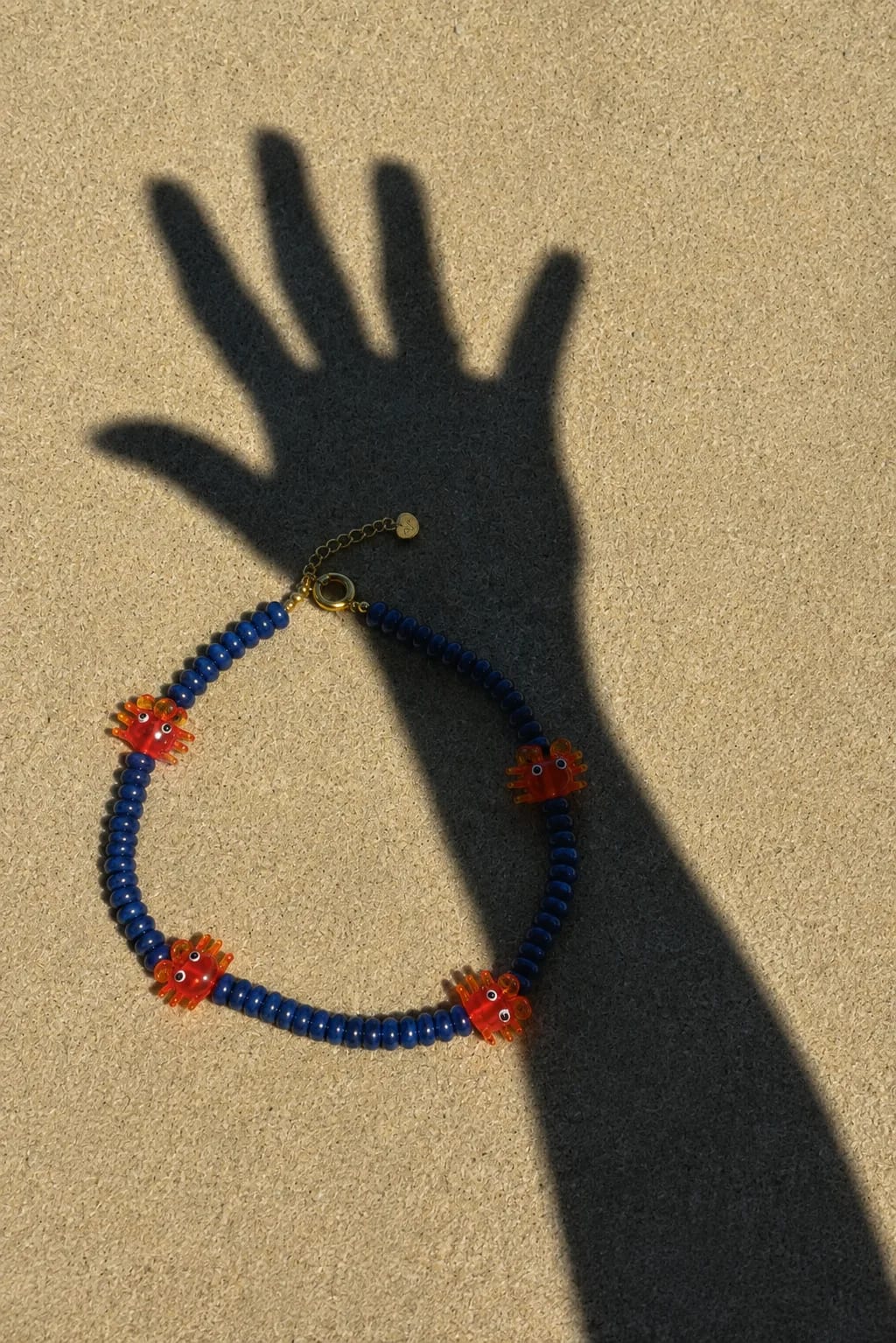
It's the part that works the hardest. Check from time to time that it closes firmly. A clasp that catches poorly ends up opening on its own, and that's how a necklace gets lost without your noticing.